
Ineffective Assistance of Counsel Examples: 6 Trial Errors That Win Post-Conviction Cases

5 Min. Read
Although most ineffective assistance of counsel claims fail, the few that win usually involve one of six specific trial errors.This insight blog breaks down exactly what separates those winning claims from the losing ones and how to set you up for success. From the specific types of errors, the evidence courts need to see, and what the Strickland standard actually requires in practice.
TL;DR
Ineffective assistance of counsel (IAC) is the most-raised post-conviction claim and one of the hardest to win. Only about 8% of state habeas IAC claims succeed, per NCSC data cited by the Innocence Project.
Every winning claim must clear the two-prong Strickland v. Washington test: deficient performance and prejudice.
Six categories of trial error account for nearly every published reversal: failure to investigate, failure to call critical witnesses or experts, failure to file a meritorious motion to suppress, failure on plea-stage advice, failure to object to inadmissible evidence or improper argument, and actual conflicts of interest.
"My lawyer was bad" is not enough. The record must show the mistake was not a strategic choice and that a different decision would have likely changed the outcome.
Evidence of the error usually lives outside the trial transcript: investigator notes, plea-offer emails, expert reports never obtained, and counsel's own testimony at a post-conviction hearing.
What Is Ineffective Assistance of Counsel?
Ineffective assistance of counsel (IAC) is a Sixth Amendment claim that your lawyer's performance fell so far below professional standards that it deprived you of a fair trial or plea. It is one of the few constitutional claims you can usually raise after a guilty plea, and it is the primary vehicle for challenging trial mistakes that do not appear on the court record of a direct appeal. The governing test comes from Strickland v. Washington, 466 U.S. 668 (1984).
To win, you must prove both:
Deficient performance. Counsel's representation fell below an "objective standard of reasonableness" under prevailing professional norms.
Prejudice. There is a "reasonable probability" that, but for the error, the result of the proceeding would have been different.
A "reasonable probability" is defined as a probability sufficient to undermine confidence in the outcome. It is not the same as "more likely than not."
Key Point: Courts apply a strong presumption that counsel acted reasonably. If the record is silent on why your lawyer did or did not do something, courts usually assume it was strategy. The job of a new post-conviction attorney is to fill the silence with evidence.
The 6 Trial Errors That Actually Win Post-Conviction Cases
Unfortunately, not all trial mistakes qualify and courts reject the vast majority of IAC petitions because most errors, even serious ones, cannot clear the prejudice prong. However, reviews of published opinions, including the Innocence Project’s Court Findings of Ineffective Assistance of Counsel Claims in Post‐Conviction Appeals report (2010), The National Registry of Exonerations 2025 Report (April 2026), and federal judicial habeas trends, show a pattern: most reversals fall into six categories. Below is what each looks like, the controlling case law, and what you need to document.
#1 Failure to Investigate
Failure to investigate is the single most common winning IAC claim. It covers the lawyer who never visits the crime scene, never interviews witnesses identified in the police file, never pulls school or medical records, or never consults an expert when the case obviously needs one.
The Supreme Court addressed this category directly in three modern decisions, all capital cases, because sentencing-stage failures provided a clean vehicle for setting standards that now govern all failure-to-investigate claims:
Williams v. Taylor, 529 U.S. 362 (2000): counsel failed to uncover and present mitigating evidence of childhood abuse and intellectual disability at capital sentencing.
Wiggins v. Smith, 539 U.S. 510 (2003): counsel performed a "rudimentary" social-history investigation and missed severe physical and sexual abuse records.
Rompilla v. Beard, 545 U.S. 374 (2005): counsel failed to review the prior-conviction file the State announced it would use at sentencing.
Proving this claim requires more than pointing to what the lawyer missed. You need to show the court what a competent investigation would have produced and connect that missing evidence directly to the verdict.
What you need to document:
The lawyer's actual investigative file (or absence of one). This is often the first thing post-conviction attorney requests, and its absence alone tells a story.
Names, addresses, and statements of witnesses the lawyer never contacted. Witness affidavits gathered after the fact are the backbone of most winning failure-to-investigate claims.
Records (medical, school, military, prison) the lawyer never requested. Courts look at what a competent lawyer would have found, not just what this lawyer chose to look for.
An affidavit from a current investigator or expert showing what a competent investigation would have produced.
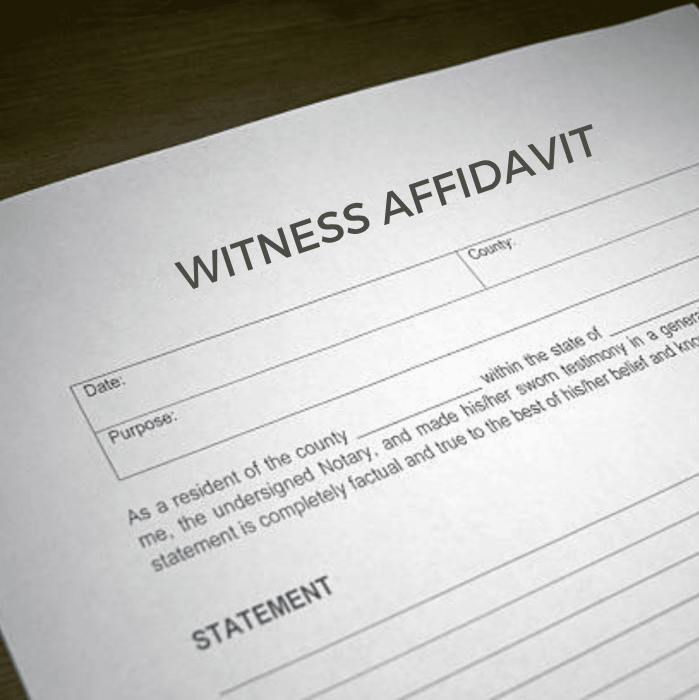
Witness affidavits gathered after the fact are the backbone of most winning failure-to-investigate claims.
Key Takeaway: Once you have built that evidentiary record, the prejudice argument writes itself: (1) show the court what existed, (2) show that counsel never found it, and (3) show why it would have mattered to the jury. Failure to investigate wins because it is easy to show after the fact what a competent lawyer would have found and the new evidence is the prejudice.
#2 Failure to Call Critical Witnesses or Experts
This is the operational version of failure to investigate. The lawyer knew about an alibi witness, a recantation, or the need for a forensic expert, and either never contacted them or never put them on the stand without a real strategic reason.
The Innocence Project's review of 54 DNA-exoneree IAC appeals identified the same recurring pattern: failed alibi witnesses, missing forensic experts, no DNA testing requested, and no cross-examination of the State's key witnesses. In cases where the courts agreed counsel was ineffective, failure to call an expert and failure to seek DNA testing were among the most-cited grounds. The claim only holds if you can reconstruct the testimony or analysis that was never presented. That means finding the witnesses, commissioning the reports, and building the record that should have existed before trial.
Examples of where this wins:
The lawyer never called a time-of-death expert when the State's timeline was the case.
The lawyer never tested available biological evidence.
The lawyer never called the alibi witness the family told him about three times.
The lawyer "decided" not to call an expert without ever consulting one.
The claim only holds if you can reconstruct the testimony or analysis that was never presented. That means finding the witnesses, commissioning the reports, and building the record that should have existed before trial.
What you need to document:
The affidavit has to be specific. Vague statements that a witness would have helped rarely move a court.
An expert report showing what testing or analysis would have revealed. If the original testing was flawed or never done, a current expert can often reconstruct what the evidence would have shown.
Proof the lawyer knew about the witness or evidence (file notes, family letters, jail calls, billing records).
| Key takeaway: The goal is to put the court in the position of seeing two versions of the trial: the one the jury saw, and the one they should have seen.
#3: Failure to File a Meritorious Motion to Suppress
If a Fourth (search and seizure), Fifth (right to remain silent, Miranda Rights), or Sixth Amendment (right to counsel) violation was sitting in your case and your lawyer never moved to suppress, that can be IAC. This is the rule from Kimmelman v. Morrison, 477 U.S. 365 (1986), where defense counsel failed to file a suppression motion not for strategic reasons but because they had skipped pretrial discovery and did not know about the search.
To win, you have to do two things at once:
Show counsel had no reasonable basis for skipping the motion.
Show the motion would have actually won (the underlying Fourth Amendment or Miranda claim has merit).
This two-step analysis trips up many petitioners who can show the search was unconstitutional but cannot show the motion would have actually been granted. That is why briefing the suppression merits in detail is essential before raising the IAC framing.
Where suppression cases win:
Warrantless searches with no good exception.
Miranda violations the lawyer never raised.
Identification procedures so suggestive that suppression was a clear path.
Because you have to prove both that counsel had no reasonable basis for skipping the motion and that the motion would have won, the documentation for this claim works on two tracks at once. So once you can prove the suppression motion has merit, the IAC argument becomes straightforward. Counsel had no reasonable basis for skipping it, and the outcome would likely have been different if the evidence had been excluded.
Key Takeaway: Kimmelman claims live or die on the merits of the motion that was never filed, so first you need brief the suppression issue first, and if it would have won, proving inadequate legal defense piece falls into place.

Bad legal advice during plea negotiations can change the outcome of a criminal case. In Lafler v. Cooper, the U.S. Supreme Court recognized that defendants may obtain relief when a lawyer’s poor advice leads them to reject a favorable plea offer and receive a much longer sentence after trial.
#4: Plea-Stage Errors (Bad Advice, Uncommunicated Offers, Immigration Misadvice)
Receiving bad legal advice during plea negotiations can change the outcome of a criminal case. In Lafler v. Cooper, the U.S. Supreme Court recognized that defendants may obtain relief when a lawyer’s poor advice leads them to reject a favorable plea offer and receive a much longer sentence after trial.
Although most criminal cases never reach a jury and usually end with a plea, this means most IAC claims wins happen at the plea stage too. The Supreme Court recognized this reality and built out a clear, defendant-friendly framework that treats plea-stage representation as just as constitutionally serious as trial representation.
The controlling cases are worth understanding together because they each close a different gap that defense lawyers commonly fall into.
Hill v. Lockhart, 474 U.S. 52 (1985) established that IAC claims survive a guilty plea. In a plea case, prejudice means showing a reasonable probability that you would have rejected the plea and gone to trial if your lawyer had given you competent advice. That is a lower bar than it sounds, and courts have found it met in cases where the lawyer dramatically overstated the strength of the State's evidence or failed to explain the sentencing consequences of the plea.
Padilla v. Kentucky, 559 U.S. 356 (2010): addressed a gap that had destroyed thousands of cases involving noncitizen defendants. The Court held that criminal defense lawyers are constitutionally required to advise noncitizen clients about deportation consequences before a plea. If the immigration consequences are clear from the statute, counsel must say so clearly. If they are not clear, counsel must at least flag that the plea may carry immigration risk. Telling a green-card holder that a plea "won't affect your immigration status" when it triggers mandatory deportation is not just bad lawyering. It is deficient performance under the Sixth Amendment.
Missouri v. Frye, 566 U.S. 134 (2012) addressed one of the most common and most damaging failures in plea-stage practice: a lawyer who receives a formal plea offer from the prosecutor and never tells the client about it. The Court held that counsel has a constitutional duty to communicate formal plea offers to the defendant before they expire. Letting a favorable offer lapse without telling the client is IAC, cut and dry.
Lafler v. Cooper, 566 U.S. 156 (2012): addressed the flip side. Where a defense lawyer gives bad advice that causes a defendant to reject a plea offer and go to trial, and the defendant then receives a substantially harsher sentence after conviction, the remedy can include reinstating the original offer. This matters because it means the prejudice from a bad plea rejection can be unwound, not just acknowledged.
What this looks like in real cases:
The prosecutor's plea offer email that never reached you.
Counsel telling you "you'll beat this at trial" without analyzing the evidence.
A green-card holder told the plea "won't affect immigration" when it absolutely will.
A defendant who rejected a 5-year offer and got 25 after trial on bad legal advice.
These claims live and die on paper. The stronger your documentation of what the offer was, when it existed, and what you were told about it, the harder it is for a court to dismiss the claim as a credibility dispute between you and your former lawyer.
What you need to document:
The original offer (email, letter, court docket entry). If the offer was never reduced to writing, phone records, jail call logs, and docket entries can sometimes reconstruct the timeline.
Your communications (or non-communications) with counsel about the offer. A complete absence of communication about a pending offer is itself evidence of deficient performance.
Sentencing exposure analysis the lawyer should have done. Courts expect competent counsel to walk a client through the realistic trial outcome against the certain plea outcome.
Immigration status and the actual statute pled to.
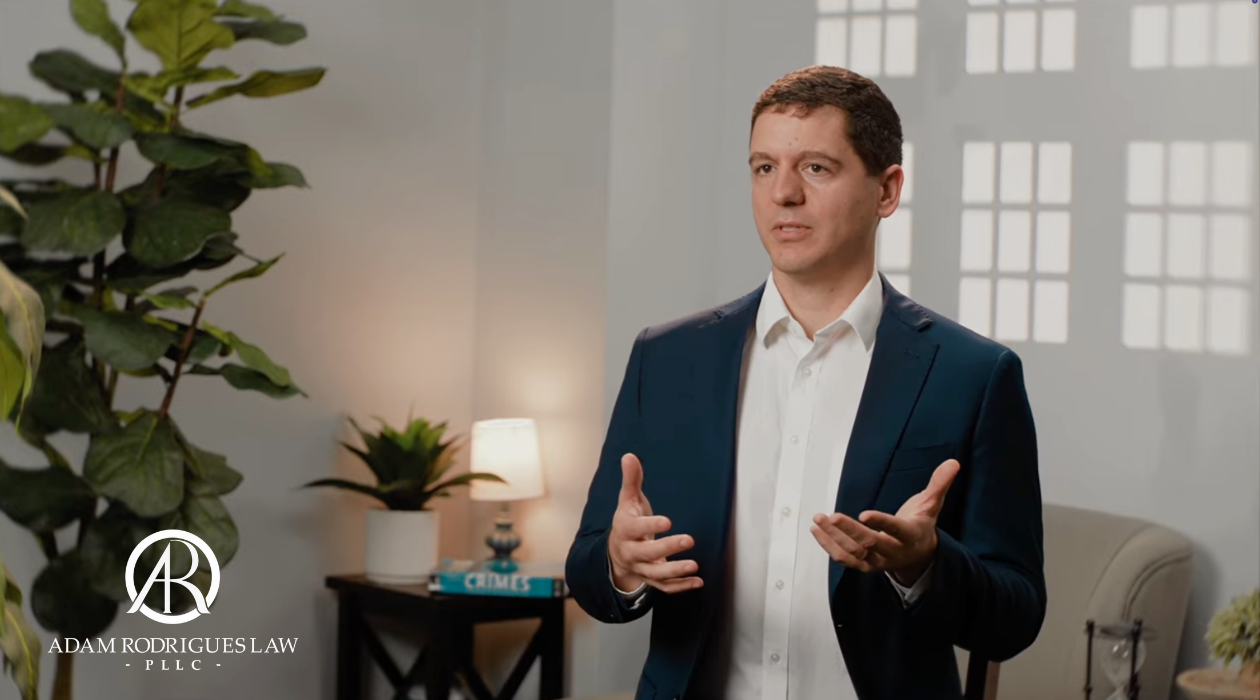
Many post-conviction cases are denied because critical sentencing or ineffective assistance issues are overlooked early. View this explanation video of how Adam Rodrigues identified an argument missed by two prior attorneys, ultimately helping restore 39 months of freedom to his client, Cordario Debose.
Plea-stage claims are also among the most fact-intensive. The more paper you can produce showing what you were told, when you were told it, and what you would have done differently, the stronger the petition.
Real Client Success Story: A powerful illustration of these errors is the case of Cordario Debose, where previous counsel's failure to properly advise on the mandatory consecutive nature of a federal 924(c) sentence relative to a prior state sentence resulted in years of wrongful continued imprisonment. Despite other counts running concurrently, the mandatory consecutive requirement was overlooked by previous attorneys who believed nothing could be done. Adam Rodrigues Law was able to step in, uncover the sentencing errors, and restore 39 months to the client. See full case and testimonial video here.
Key Takeaway: A plea-stage IAC claim is the closest thing in this practice to a clean factual story: "here is the offer, here is what I was told, here is what I would have done." If you can prove all three, courts tend to pay attention and can even put the old offer back on the table.
#5: Failure to Object to Inadmissible Evidence or Improper Argument
A trial lawyer who sits silent while the prosecutor introduces highly prejudicial evidence or delivers an improper closing argument can be just as ineffective as one who never investigated the case. The difference is that failures to object are often invisible in the trial record because there is no motion, no ruling, and no appellate issue preserved. The jury hears the evidence, the case proceeds, and the damage is done without a single entry in the transcript signaling anything went wrong.
This category covers a wide range of conduct that competent defense counsel should have challenged:
Other-acts or "bad character" evidence with no proper purpose.
Hearsay that violated Confrontation Clause rights under Crawford v. Washington
Improper vouching by the prosecutor for a witness.
Inflammatory closing arguments that invited the jury to send a message rather than decide the facts.
Unconstitutional or misleading jury instructions that misstated the law or quietly lowered the State's burden of proof in ways the defense never flagged.
Beyond the trial itself, this category serves an important procedural function in post-conviction practice. When trial counsel fails to object to something that should have been excluded, that issue is typically treated as waived on direct appeal. The appellate court sees no preserved objection and applies plain error review, a standard that rarely results in reversal. Therefore, repackaging the underlying error as an IAC claim is frequently the only way back into court because the constitutional violation is no longer the evidentiary ruling itself. That distinction matters enormously for defendants who have already lost their direct appeal and are looking for a viable theory in post-conviction proceedings.
The hardest part of this category is prejudice. Courts rarely reverse on a single missed objection, reasoning that one excluded question or improper comment did not likely change the outcome alone. The winning version almost always involves cumulative error, a pattern of unobjected-to problems that together cast serious doubt on the verdict. When the evidence was close, witness credibility was the central issue, or the improperly admitted material went directly to the State's core theory, that pattern can satisfy the prejudice standard.
Documenting this claim means going through the trial transcript line by line, flagging every moment where a competent lawyer would have objected, and showing the court what would have been excluded if they had. That analysis needs to be paired with a clear argument about what the trial would have looked like without that evidence, because the court needs to see not just what went wrong but why it changed the outcome.
Key Takeaway: Build the cumulative-error story. List every objection your lawyer should have made, what the court should have done about it, and what the trial would have looked like without that evidence in front of the jury.
6. Actual Conflict of Interest
An actual conflict of interest that adversely affects representation is its own lane of IAC, and it is one of the most underused theories in post-conviction practice. Most defendants assume their lawyer was simply ineffective. Fewer think to ask whether the lawyer had a competing loyalty that quietly shaped every decision made at trial. When that competing loyalty can be documented, the legal standard shifts in the defendant's favor in a meaningful way.
Under Cuyler v. Sullivan, 446 U.S. 335 (1980), if you can show your lawyer was operating under an actual conflict of interest, you do not have to prove ordinary Strickland prejudice. You only need to show that the conflict adversely affected the lawyer's performance, meaning it caused counsel to make a specific choice, or avoid a specific choice, that a conflict-free lawyer would not have made. That is a significantly lower bar than showing a reasonable probability of a different outcome, and it reflects the Court's recognition that conflicts corrupt the attorney-client relationship in ways that are often impossible to measure precisely.
Then in 2012, the Supreme Court revisited this standard in Mickens v. Taylor, 535 U.S. 162 (2002) and limited the circumstances where Cuyler applies, but did not eliminate it. The Court held that the Cuyler standard applies most clearly where the defendant objected to the conflict at trial or the trial court was aware of it and failed to inquire. Outside that context the standard is murkier, but a well-documented conflict with clear adverse effects on specific tactical decisions can still prevail even after Mickens.

Under Cuyler v. Sullivan, a criminal defendant may obtain post-conviction relief when a lawyer’s divided loyalties adversely affect representation. These conflict-of-interest claims often involve co-defendants, former clients, financial relationships, or personal interests that quietly shape trial strategy and cause counsel to avoid decisions a conflict-free lawyer would have made.
Common fact patterns of lawyer conflict of interest in practice:
One lawyer representing co-defendants whose interests diverged.
A lawyer who previously represented a key prosecution witness.
A lawyer with a financial or personal relationship with the alleged victim, prosecutor, or judge.
A lawyer trying to protect their own reputation, who pulled punches to avoid a malpractice issue.
Identifying the conflict is only the first step. You also need to trace it forward into specific decisions counsel made or avoided, because that connection between the conflict and the concession is what the court needs to see.
What you need to document:
The prior representation or relationship (engagement letters, court appearances, payment records). Courts want documented proof of the conflict, not just an inference. The more concrete the relationship, the stronger the claim.
The specific decisions where the conflict steered counsel away from a defense (cross-examinations not conducted, theories not pursued, witnesses not called). Once you can show the conflict existed and that it steered specific decisions, you have the core of a Cuyler claim without needing to satisfy the full Strickland prejudice standard.
Key Takeaway: Conflict of win because the prejudice presumption is lower. Identify the conflict first, then trace it to specific tactical concessions.
How Courts Actually Decide These Cases
Understanding the six error categories is only half the picture. Knowing how judges evaluate them is what turns a well-documented IAC theory into a winning brief. After reviewing published IAC reversals across Tennessee and federal courts, three patterns appear consistently, and if you are building a claim, all three need to show up in your record.
The record shows the decision was not strategic. This comes out either at the post-conviction hearing when cousel admits "did not think of it," "did not have time," or "did not have the money," or the file itself shows no decision was ever made, or through a case file that contains no notes, no investigative steps, and no indication anyone weighed the option. Courts draw a hard line between a lawyer who deliberately chose not to pursue something and a lawyer who simply never got around to it. Only the first qualifies as strategy.
The prejudice is very specific. The second pattern is that prejudice is argued with surgical specificity, not broad strokes. Winning briefs do not say "the trial was unfair." They say "if the jury had heard X, the verdict would have been Y, because the State's case turned on Z." They walk the court through exactly what evidence was missing, exactly what the jury would have heard if trial counsel had done the work, and exactly why the State's case collapses when that evidence enters the picture. The argument has to be granular enough that a judge can see the alternate trial in their mind.
The new post-conviction attorney performed the investigation trial counsel never completed. When post-conviction counsel locates overlooked witnesses, commissions forensic testing, obtains medical or employment records, uncovers prior inconsistent statements, and then presents that evidence to the court through sworn affidavits and authenticated exhibits, it becomes powerful proof that the original defense was inadequately investigated or improperly developed. Courts are far more likely to find deficient performance when the missing evidence is not hypothetical, but fully assembled and capable of being evaluated in concrete form at the evidentiary hearing.
What This Means For You: If you are evaluating a possible IAC claim, the question is not whether your lawyer was bad or inadequate. The question is whether you can document what the missing investigation looked like, reconstruct the record that should have existed, and tie that missing record to a concrete change in outcome. That is the work, and it has to happen before you file.
Tennessee and Federal Procedural Notes
Even a strong IAC claim can be permanently lost if it is not raised in the right court, at the right time, in the right petition. Procedural default is not a technicality courts overlook. It is an absolute bar, regardless of how compelling the underlying claim is.
In Tennessee, IAC claims are brought under the Post-Conviction Procedure Act, Tenn. Code Ann. § 40-30-101 et seq., with a one-year deadline from the date the conviction becomes final. One important distinction worth knowing: Tennessee is one of the few states that guarantees an evidentiary hearing and court-appointed counsel the moment you file, even if you file pro se. That makes the state petition a genuine opportunity to build your record, not just a procedural box to check.
In federal court, Antiterrorism and Effective Death Penalty Act of 1996 (AEDPA) imposes its own one-year clock under 28 U.S.C. Section 2244(d) for state prisoners, and 28 U.S. Code § 2255 governs federal prisoners on the same timeline. Federal review of state IAC denials applies a doubly deferential standard, meaning the state-level record is almost always your best shot at a full hearing. Once you are in federal court, you are largely fighting with whatever the state record already contains.
For a full breakdown of the Federal and Tennessee PCR processes, including what happens at the hearing and what to expect at each step, refer here.
Did Your Defense Lawyer’s Mistakes Cost You a Fair Trial, Better Plea Deal, or Lower Sentence?
If you believe your trial lawyer's mistakes cost you a fair trial or a better plea, the next step is a focused review of the record, the file, and the evidence that did not make it into court.
Call Adam Rodrigues Law 615-270-2074 now or book your private consultation today. We will pull your transcripts, identify the strongest IAC theory, and tell you straight whether the facts support a petition.
FAQs
-
Two parts under Strickland v. Washington: deficient performance (your lawyer messed up in a way no competent attorney would) AND prejudice (the mistake changed the outcome of your case). Common winners: the lawyer never conveyed a favorable plea offer (Missouri v. Frye), gave bad advice that made you reject one (Lafler v. Cooper), gave wrong immigration advice (Padilla v. Kentucky), or failed to investigate a crucial alibi or DNA evidence (Wiggins v. Smith).
-
Failure to investigate. It's the single most common winning ground in published opinions. Courts have reversed when the lawyer never interviewed key witnesses, never pulled records sitting in the file, or never consulted an expert when the case clearly needed one. The Supreme Court has reversed convictions on this ground three times: Williams v. Taylor, Wiggins v. Smith, and Rompilla v. Beard.
-
Yes! A guilty plea does not block an ineffective assistance of counsel claim. Under Hill v. Lockhart, you have to show the advice was deficient and that you would have rejected the plea and gone to trial with competent advice. Common winners: wrong immigration advice (Padilla v. Kentucky), uncommunicated plea offers (Missouri v. Frye), or bad advice that made you reject a better deal (Lafler v. Cooper).
-
Hard to say with precision. The most authoritative recent federal data, from BJS's 2015 report on state criminal appeals, found roughly a 4% reversal rate for ineffective counsel claims in 2010, one of the lowest reversal rates among all appellate issues tracked.
Older NCSC research pegged state habeas IAC grant rates closer to 8%. A 2010 Innocence Project review of 54 IAC appeals filed by DNA exonerees found courts confirmed ineffective assistance in only 7 (about 13%).
A more recent 2022 re-appraisal by Albert E. Scherr in the Loyola of L.A. Law Review raised serious questions about how consistently judges apply Strickland in DNA cases. Each study measures something different (appellate reversals, state habeas grants, federal habeas grants, DNA-exoneree subsets), and most published research focuses on wins rather than failures, which makes overall failure rates hard to pin down. Broader habeas studies suggest federal habeas grant rates sit well below 1%.
The Strickland standard is intentionally hard to meet. The winning claims are almost always well-documented, fall into one of the six error categories, and come with affidavits, expert reports, and a clear theory of prejudice.
-
Usually one year, and the clock runs faster than people think. In Tennessee, you have one year from the date your conviction becomes final under the Post-Conviction Procedure Act, and federally under, AEDPA. Late filings sometimes survive under equitable tolling (Holland v. Florida), but it's rare.
Last Updated: July 17, 2026
Related Blogs & Resources:
About the Author
Adam Rodrigues is the lead attorney of Adam Rodrigues Law PLLC and based in Murfreesboro, Tennessee. He practices post-conviction relief, criminal appeals, and compassionate release cases in Tennessee, North Carolina, and federal courts across multiple districts. His post-conviction work has restored years of freedom to wrongly sentenced clients, including a recent 39-month sentence reduction for a federal client whose prior counsel missed a sentencing argument under 18 U.S.C. § 924(c). Call Adam Rodrigues Law 615-270-2074 now or book your private consultation today.
Quick Case Law References
Strickland v. Washington (two-prong test: deficient performance + prejudice); Hill v. Lockhart (IAC survives guilty plea); Padilla v. Kentucky (immigration misadvice); Missouri v. Frye (uncommunicated plea offer); Lafler v. Cooper (bad advice to reject plea); Kimmelman v. Morrison (failure to file suppression motion); Williams v. Taylor, Wiggins v. Smith, Rompilla v. Beard (failure to investigate mitigation); Cuyler v. Sullivan and Mickens v. Taylor (conflict of interest); Crawford v. Washington (Confrontation Clause); Garza v. Idaho (presumed prejudice when counsel fails to file requested appeal).